
Metro
Boboye Calls for Unified Transports Chain, Says Fragmented Systems Create Inefficiencies.

By Stella Okocha
The President and Chairman of the Council of the Chartered Institute of Logistics and Transport, CILT Nigeria, Boboye Oyeyemi, has said that transport fragmented systems create inefficiencies and environmental strain, lack of integration limits accessibility for millions, especially in under-served areas.
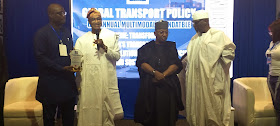
Boboye who is also the president of the Aviation Safety Round Table and Chairman of Global Transportation Policy Multimodal Roundtable Conference said this during his welcome address at the event on wednesday 17 june 2026 at Marriott hotel, Ikeja Lagos.
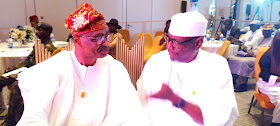 According to him, “I’m highly delighted to be involved in this noble session organised by the Global Transport Policy Round Table. It couldn’t have come at a better time than these globally challenging times. There are massive reforms on our home front while the entire global landscape is being reshaped by emergent geopolitical indices and hegemonic squabbles. Movement and logistics around the Strait of Hormuz brutally re-echoed the importance of global transportation”.
He stated that the Nigerian Transport policy was initiated some 16 years ago, and Its fundamental objective was to develop an adequate, safe, environmentally sound and efficient transport system, in the context of a progressive and competitive economy.
“The Nigerian environment is eminently positioned to utilise maximally, the 4 most important means of transportation-road, rail, water and air transport. Our transport systems are the lifeblood of our economy and the arteries of our communities. Yet, too often, they operate in silos-road, rail, air, and waterways functioning independently, rather than as parts of a unified whole”, Boboye added.
Boboye added that the challenge before panelists is to break down these silos and design a truly integrated transportation framework one that aligns infrastructure, technology, policy, and human needs into a single, coherent system.
“Transportation is more than just movement from point A to point B. It is the lifeblood of economic growth, the bridge to social inclusion, and a critical lever in our fight against climate change. Poor multi-modal transport management could result in congestion which costs billions in lost productivity”.
“Oftentimes, road networks are planned without rail integration, urban transit disconnected from rural needs, freight corridors competing rather than complementing
“Perhaps in recognition of the need to harmonise possible issues in multi modal transportation, the federal government of Nigeria mandated the Nigeria Safety Investigation Board (NSIB) to expand the scope of its investigative functions to include incidents and accidents in the air, rail, road and marine transport”, Boboye explained.
He added that the panel discussion sessions will explore: Policy Harmonization – regarding the alignment of regulations across transportation modes and jurisdictions, Technology Integration – Leveraging digital platforms especially in this era of Artificial Intelligence (Al) manipulations for real-time coordination and ticketing; Sustainability Goals – Embedding low-carbon solutions into every transport plan, and create Equity and Accessibility – Ensuring no community is left behind in the mobility revolution.
“It is hoped that intervention sessions such as this will complement, modify and positively influence transportation policies at the initiation, formulation and the implementation stages that will make the entire globe, a better place for all.
“I urge each of you to approach today’s discussions with an open mind and a collaborative spirit. I want to us challenge assumptions, share best practices, and forge partnerships that will outlast this conference. The solutions we design here can set the standard for an integrated transportation policy – not just for our nation and region, but as a model for the world.
“As we begin, I request each of you to bring your expertise, your creativity, and your boldest ideas to the table. Let us leave this conference not only with a deeper understanding of integrated transport systems but with a clear road map for making them a reality. Collectively, we can build transport networks that are smarter, greener, and more connected for the benefit of our cities, our economies, and our people. The road ahead requires vision, courage, and cooperation. But if we succeed, we will not only move people and goods more efficiently we will move society forward”, he concluded.

Customs, World Bank Conclude Two-Week PCA Mission to Strengthen Audit Operations.

Customs, American Business Council Deepen Trade Collaboration.

NCS FOU Zone C Seizes 3,310 Jerrycans of Smuggled Vegetable Oil Worth ₦403.5m

GTP Roundtable Conference: Dr Musa Highlights Challenges of the Transport Chain, Prefer Solutions

Boboye Calls for Unified Transports Chain, Says Fragmented Systems Create Inefficiencies.

CUSTOMS, POLICE STRENGTHEN SECURITY SYNERGY IN KOGI STATE

Apapa Customs Intercepts 1.8tonnes of Cannabis Sativa, Expired Pharmaceuticals Worth 12Billion.

NCS Collaborate with Sister Agencies, Arrest 4 Suspects with 22 Elephants Tusks

Compt. Anani Engage in Strategic Partnerships to Set Agenda For Compliance, Trade Facilitation

Customs Honours DCG Omale as he retires ; Celebrates his 35years of Effective Service

Customs, Police Strengthens Inter-agency Collaboration on National Security

Customs Launch Special Operations to Protect Local Investments Against Vegetable Oil Smuggling

DC ADEWOLE VISITS ASEYIN OF ISEYIN LAND AND SOUN OF OGBOMOSHO, SEEKS TRADITIONAL SUPPORT AGAINST SMUGGLING

NRC Unveils Plans to Electrify Major Rail Corridors From Lagos, Warri Within 5 Years

NIMASA to sponsor 10 staff annually for Master’s degrees under renewed WMU partnership

DCG Dera Nnadi Bids Farewell To NCS, Celebrates Legacy of Service

Compt Joe Anani Records ₦178 billionin Revenue; Handover Leadership to DC MIiko

LASWA, Interferry Commence Practical Phase of Ferry Safety Development Programme

Nigeria Customs Intensifies Stakeholders’ Support Towards National Single Window Implementation

Allied Air, SAHCOL to launch cargo operations at Ogun Gateway International Airport

NCS Honours DCG Nnadi, ACG Egwu at Ceremonial Pulling-Out Parade

Customs Investigates Officers Over Anti-Smuggling Incident In Oshogbo

Oyo/Osun Command Strengthens Partnership with BATN; Pays Courtesy Visit to Alaafin of Oyo
