
Maritime
Cargo Growth Must Lead To Lower Costs, Faster Clearance – NPERA DG

By Stella Okocha
The Director General/CEO of the Nigerian Ports Economic Regulatory Agency, NPERA, Dr. Pius Akutah Ukeyima, MON, has said Nigeria’s rising cargo throughput will count for little unless it translates into faster clearance, lower logistics costs and predictability for shippers and investors.
Dr. Akutah stated this on Thursday in a paper delivered at the Primetime Reporters Maritime Conference held at Rockview Hotel, Apapa, Lagos, themed: “Smarter Gateways, Greener Logistics: Leveraging the Port System and the National Single Window.”
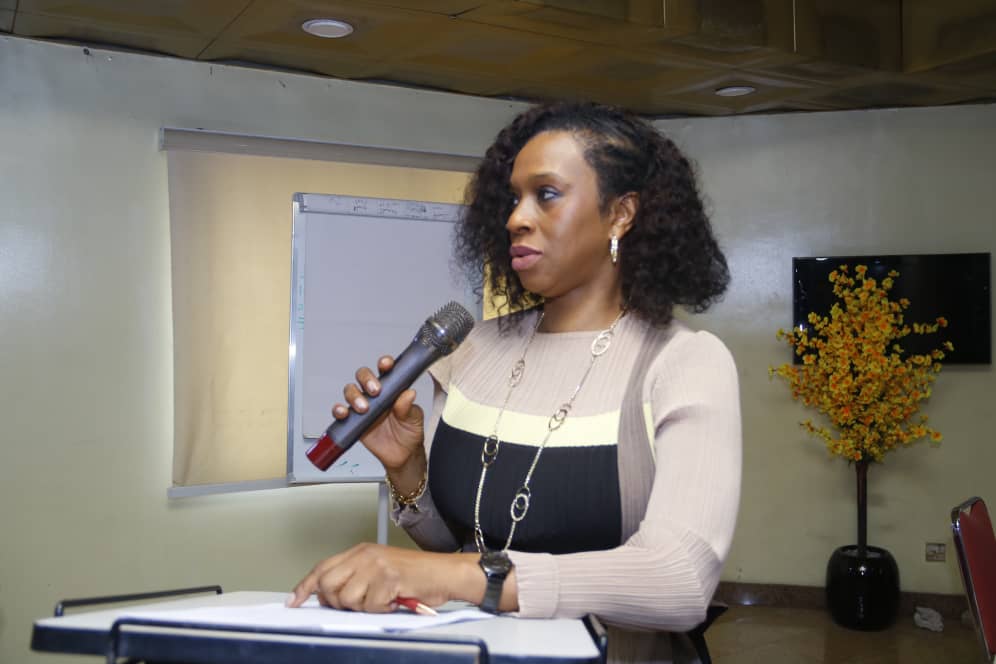
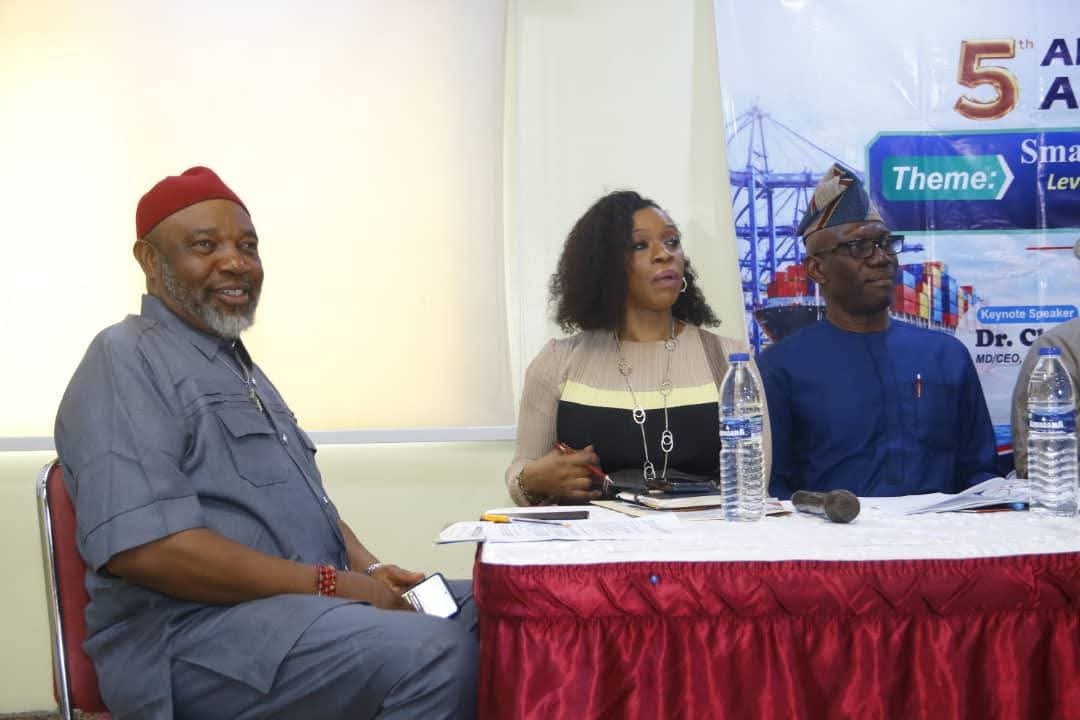 He was represented at the event by the Director, Regulatory Services, NPERA, Mrs. Adaora Nwonu.
According to Akutah, Nigeria’s ports are not merely points where ships berth, but strategic economic gateways that affect the price of imported inputs, reliability of exports, attractiveness of investment and the cost of doing business.
Citing the Nigerian Ports Authority’s 2024 Consolidated Management Report, he disclosed that cargo throughput rose from 71.21 million metric tonnes in 2023 to 103.34 million metric tonnes in 2024, representing a 45.1% increase. Ship calls grew from 3,791 to 4,005, while container throughput increased from 1,591,194 TEUs to 1,744,972 TEUs. Export-laden containers reportedly grew by 53.7%.
He noted, however, that average vessel turnaround time only moved marginally from 4.7 days to 4.6 days, showing that volume growth has not been matched by efficiency.
“More cargo is not, by itself, proof that cargo moves quickly, that costs are predictable or that exporters can meet delivery schedules. That is progress, but it also illustrates why the industry must track a wider range of indicators,” he said.
Akutah warned that ports can handle more cargo and still impose avoidable costs on the economy where vessels wait too long, documentation is repeatedly submitted, cargo evacuation is unreliable and charges are unclear and unpredictable.
He called for a performance framework that connects port statistics to shippers’ experience, tracking vessel waiting and turnaround time, cargo dwell time, average clearance time, container evacuation and return cycles, truck turnaround, service reliability and total port cost, with published baselines and time-bound targets.
On the National Single Window launched in March 2026, the NPERA boss said its success must be measured by outcomes – reduced documentation, faster approvals, fewer duplicative processes, improved transparency and lower transaction costs – not just by the existence of a portal.
“Digitalising inefficient processes without redesigning them merely makes inefficiency digital. The objective must be to simplify the process itself,” he stressed, calling on agencies to harmonise procedures, exchange data securely and adopt risk-based inspections.
Speaking on green logistics, Akutah said a smarter port system must also be greener, as congestion, prolonged vessel waiting and inefficient truck movements increase emissions and costs. He referenced the International Maritime Organization’s 2023 GHG strategy targeting at least 40% reduction in carbon intensity by 2030 and net-zero emissions by around 2050.
He urged Nigeria to position its port system through improved cargo evacuation, energy-efficient equipment, cleaner transport options and digital traffic management, noting that green logistics is not just an environmental obligation but an economic opportunity.
Akutah said NPERA has a critical mandate to ensure efficiency and investment translate into fair outcomes by promoting transparent tariffs, discouraging arbitrary or unapproved charges and ensuring a level playing field among regulated providers.
He listed five priority actions: integration of the Single Window with port community systems, performance measurement, improved evacuation via road, rail, barge and inland logistics, green investment, and strengthened economic regulation.
“Nigeria does not merely need busier ports. We need smarter, faster, more transparent and environmentally responsible gateways,” he said.
“A smarter gateway reduces friction. Greener logistics reduces waste. Effective economic regulation ensures that efficiency creates value.”




Integrate Security Awareness Into School Curriculum, Tantita Executive Urges FG

LASWA Calls For Homegrown Multimodal Transport Model

Tantita Security Calls For Overhaul Of Nigeria’s Maritime Security System

Dredgers Association Disowns Report Alleging Extortion Against Lagos Commissioner Alebiosu

Customs FOU Zone A Intercepts Five Live Pangolins In Ogun, Hands Over To Wildlife Centre

Blue Line: LAMATA To Add Alakija, FESTAC, Trade Fair Stations By February 2027

Lagos Blue Economy: Govt Engages Riverine Women Leaders On Inclusion, Sustainable Development

NFVCB Moves To Take Nollywood To China As Board Meets China Film Administration

NIHOTOUR Honours Tinubu With Highest Tourism Award As President Backs Sector Reforms

Oyetola Inaugurates NIMBEX Committee To Drive Maritime Investment

Customs Operation Whirlwind Seizes 38,700 Litres Of Smuggled Fuel In Adamawa, Worth N63.1m

Operation Sea Guardian: NIMASA Cracks Down On Cabotage Violators In Lagos Waters

NCS FOU Zone C Seizes 3,310 Jerrycans of Smuggled Vegetable Oil Worth ₦403.5m

Compt Joe Anani Records ₦178 billionin Revenue; Handover Leadership to DC MIiko

APAPA PORT COMMAND INTERCEPTS ₦26.5B CANNABIS INDICA CONCEALED WITH IMPORTED VEHICLES

Revenue Boost: Apapa Customs Record ₦28 Billion in 24 Hours; Strengthens Government’s Revenue.

NIMASA Strengthens Partnership on Seafarer’s Warfare with Mission to Seafarers (MtS)

Nigeria Customs Raises Breast Cancer Awareness in Abuja, Secures ₦50m Pledge

NIMASA Deepen Collaboration with NSIB to Promote Maritime Safety, Security

NRC Unveils Plans to Electrify Major Rail Corridors From Lagos, Warri Within 5 Years

NIMASA to sponsor 10 staff annually for Master’s degrees under renewed WMU partnership

DC ADEWOLE VISITS ASEYIN OF ISEYIN LAND AND SOUN OF OGBOMOSHO, SEEKS TRADITIONAL SUPPORT AGAINST SMUGGLING

NIMASA DG GETS AWARD OF RECOGNITION ON IMPACTFUL MENTORSHIP FROM ALMA MATER
