
Railway
NRC Unveils Plans to Electrify Major Rail Corridors From Lagos, Warri Within 5 Years

By Stella Okocha
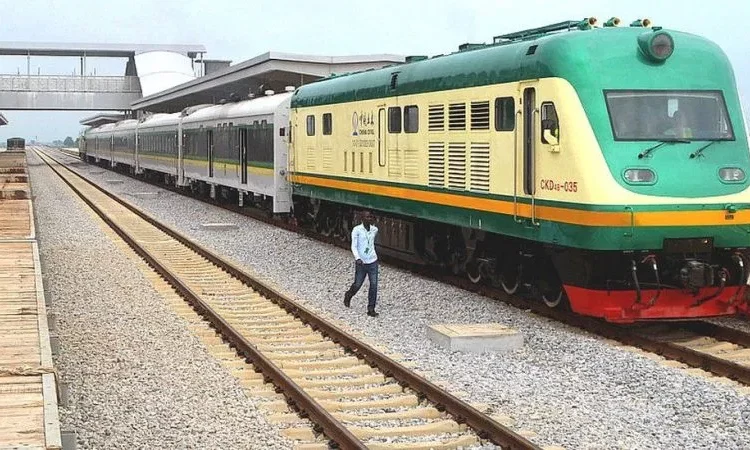
The Nigerian Railway Corporation (NRC) has unveiled plans to electrify major rail corridors across the country within the next five years, beginning with strategic routes in Lagos and Warri as part of efforts to modernise Nigeria’s rail transport system.
The managing director of the corporation, Kayode Opeifa, disclosed this on Saturday during an interview on Sunrise Daily on Channels Television.
Opeifa explained that the choice of Lagos and Warri as starting points for the electrification programme is largely influenced by the availability of gas resources that can support power generation for electric rail operations.
According to him, transitioning from diesel-powered trains to electric rail systems will enhance operational efficiency, reduce costs over time, and align Nigeria’s railway development with global best practices.
The NRC boss also reassured passengers of improved safety along the Abuja–Kaduna rail corridor, noting that train movements and activities at stations are currently monitored from a central control room.
He added that the corporation plans to replicate similar monitoring and surveillance systems across other rail corridors nationwide as part of broader efforts to strengthen rail security.
In response to growing passenger demand, Opeifa announced that the number of daily trips on the Abuja–Kaduna Train Service has been increased to three.
Addressing concerns about ticket racketeering on the route, he acknowledged that the challenge exists largely because demand often exceeds available seats.
However, he noted that the corporation has introduced stricter verification procedures to tackle the problem.
Passengers, he explained, are now subjected to double verification-first at the waiting area and again during boarding, a process he said has significantly reduced cases of illegal ticket sales.
Opeifa also called for stronger collaboration between state governments and the Railway Police to improve the protection of rail infrastructure across the country.
He noted that the Railway Police currently operate in 26 states and urged state governments to consider the unit as part of their security architecture by providing the necessary support and partnership.
According to him, railway infrastructure remains a critical national asset whose security is closely tied to the safety of mobility corridors across the country.
Drawing from his experience as a former commissioner in Lagos State, Opeifa recalled how the Railway Police supported the state government during the cleanup of the Oshodi area, describing it as a demonstration of effective inter-agency collaboration in protecting public assets.
“The history of the Nigerian Railway Corporation is the history of Nigeria itself,” he said, adding that many of the challenges confronting the railway system reflect broader national development issues.
Opeifa also traced the evolution of Nigeria’s modern rail system, noting that a major overhaul began in 2015 with the introduction of standard gauge rail lines.
He credited the administration of former President Muhammadu Buhari with delivering landmark projects including the Abuja-Kaduna Railway, the Warri-Itakpe Railway, the Abuja Rail Mass Transit, and the Lagos-Ibadan Railway, while also initiating the Port Harcourt–Maiduguri rail corridor.
He further highlighted the constitutional amendment that moved railway from the Exclusive Legislative List to the Concurrent List, a development that has enabled state governments such as Lagos State, Kano State, Ogun State and Plateau State to participate more actively in rail development.
The NRC managing director said his priority is to position the corporation as a key driver of national integration and economic growth while ensuring that the rail system operates in line with international standards.
“Railway is an enabler of growth,” he said, noting that government investments in rail infrastructure across economically strategic states are aimed at boosting mobility, trade and regional connectivity.
Opeifa also revealed that the corporation has developed a national rail map designed to integrate state rail systems with the national rail network to improve connectivity across the country.
Highlighting developments along the eastern rail corridor, he described the main railway station in Enugu as a massive and well-designed facility with underground structures, recalling that the corridor once played a major role in national revenue generation.
He added that the NRC is also exploring the tourism and entertainment potential of rail transport as part of broader plans to expand services and improve passenger experience nationwide.

Integrate Security Awareness Into School Curriculum, Tantita Executive Urges FG

LASWA Calls For Homegrown Multimodal Transport Model

Tantita Security Calls For Overhaul Of Nigeria’s Maritime Security System

Dredgers Association Disowns Report Alleging Extortion Against Lagos Commissioner Alebiosu

Customs FOU Zone A Intercepts Five Live Pangolins In Ogun, Hands Over To Wildlife Centre

Blue Line: LAMATA To Add Alakija, FESTAC, Trade Fair Stations By February 2027

Lagos Blue Economy: Govt Engages Riverine Women Leaders On Inclusion, Sustainable Development

NFVCB Moves To Take Nollywood To China As Board Meets China Film Administration

NIHOTOUR Honours Tinubu With Highest Tourism Award As President Backs Sector Reforms

Oyetola Inaugurates NIMBEX Committee To Drive Maritime Investment

Customs Operation Whirlwind Seizes 38,700 Litres Of Smuggled Fuel In Adamawa, Worth N63.1m

Operation Sea Guardian: NIMASA Cracks Down On Cabotage Violators In Lagos Waters

NCS FOU Zone C Seizes 3,310 Jerrycans of Smuggled Vegetable Oil Worth ₦403.5m

Compt Joe Anani Records ₦178 billionin Revenue; Handover Leadership to DC MIiko

APAPA PORT COMMAND INTERCEPTS ₦26.5B CANNABIS INDICA CONCEALED WITH IMPORTED VEHICLES

Revenue Boost: Apapa Customs Record ₦28 Billion in 24 Hours; Strengthens Government’s Revenue.

NIMASA Strengthens Partnership on Seafarer’s Warfare with Mission to Seafarers (MtS)

Nigeria Customs Raises Breast Cancer Awareness in Abuja, Secures ₦50m Pledge

NIMASA Deepen Collaboration with NSIB to Promote Maritime Safety, Security

NRC Unveils Plans to Electrify Major Rail Corridors From Lagos, Warri Within 5 Years

NIMASA to sponsor 10 staff annually for Master’s degrees under renewed WMU partnership

DC ADEWOLE VISITS ASEYIN OF ISEYIN LAND AND SOUN OF OGBOMOSHO, SEEKS TRADITIONAL SUPPORT AGAINST SMUGGLING

NIMASA DG GETS AWARD OF RECOGNITION ON IMPACTFUL MENTORSHIP FROM ALMA MATER
