
Economy
FG Launches National Single Window; Set to Crash Cargo Dwell Time to 7Days.

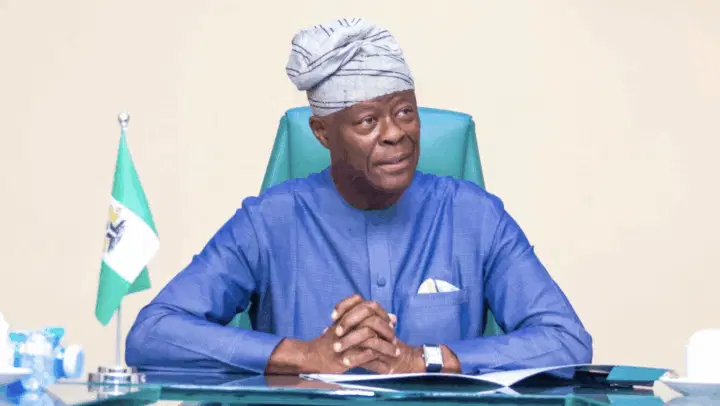
The federal government has launched Phase 1 of the National Single Window (NSW) initiative to drastically cut cargo dwell time from the current 18-21 days to less than seven days at the nation’s ports before the year ends.
The launch happened in Lagos yesterday by the Minister of Finance and Coordinating Minister of the Economy, Mr Wale Edun, who said that the NSW represented “a decisive step to modernise Nigeria’s trade ecosystem”.
According to him, “It coincides with the deal last week to upgrade Apapa (built 1913) and Tin Can (built 1977) ports. This is a coordinated reform designed to cut cargo dwell time, reduce trade costs, and unlock economic growth.
Speaking further, the minister said the reform had become necessary because, “As of 2025, cargo dwell time in Nigerian ports averaged 18–21 days.” This is approximately 475% higher than the global average of 4 days.”
He noted that the long cargo dwell time in Nigeria, had resulted in a high cost of doing business, delays for importers and exporters, and reduced competitiveness of Nigerian goods.
Mr Edun also revealed that 73% of cargo dwell time in Nigeria was spent on documentation, customs processing, and regulatory approvals.
“This means the primary bottleneck is not physical infrastructure alone — it is process inefficiency,” he said.
The minister assured that NSW is Nigeria’s deliberate and integrated approach to addressing transaction delays.
In his words, “Phase 1 of the NSW directly targets the 73% transaction delay component by introducing a single digital platform for trade documentation, eliminating multiple agency visits and duplicative processes.”
Mr Edun also revealed that other measures to curb the delays, would include electronic submission of licences, permits, certificates (LPCOs), digital manifest processing, centralised risk management across agencies and transparent electronic payments.
He explained that he impact on dwell time, would be faster document processing, reduced human interface and bottlenecks and predictable and transparent timelines.
The minister said port modernisation would fix the physical bottlenecks as the government moves to upgrade Apapa and Tin Can Ports, which handle 70 per cent of Nigeria’s trade.
He added that the modernisation would address the problems of congestion at terminals, inefficient cargo handling and outdated infrastructure in order to ensure faster cargo discharge and evacuation, reduced port congestion and improved turnaround time for vessels and trucks

Nigeria Customs Service, Fire Service, Unilever PLC, Sign MoUs to Strengthen Cooperation.

NCS Kebbi Command Collaborates with NIGERIEN CUSTOMS to Ease Trade, Bring Relief to MASSES.

NCDMB Call for Pan-African Local Content Synergy on Economic Diversification, Industrial Development

Oyetola Inaugurates Technical Committee to Accelerate Fish Production in Nigeria.

IBOM AIR Expands Fleets, Takes Delivery of Third Airbus A220-300

DC Salako Assumes Office as Acting CAC of Llilypond Command as Compt. Ariyibi Retires.

Customs, WCO, UKID Partners on Anti-Corruption Risk Mapping, SOPs.

DCG Tijanni Abe Retires Honourably After 35 Years of Meritorious Service.

Revenue Boost: Apapa Customs Record ₦28 Billion in 24 Hours; Strengthens Government’s Revenue.

Customs Handsover 399 JOJEF Pump-Action, 535 Assorted Component Parts to NCCSALW, Arraign 2 Suspects.

NCS Says Anti-Corruption Measures is Paying Off; Highlights Integrity Reforms, as Adeogun Wins IMPR

Apapa Customs Command Smash Revenue Collection Records; Generates 323 Billion in one Month

Compt Joe Anani Records ₦178 billionin Revenue; Handover Leadership to DC MIiko

NIMASA Deepen Collaboration with NSIB to Promote Maritime Safety, Security

NIMASA Strengthens Partnership on Seafarer’s Warfare with Mission to Seafarers (MtS)

NRC Unveils Plans to Electrify Major Rail Corridors From Lagos, Warri Within 5 Years

NIMASA to sponsor 10 staff annually for Master’s degrees under renewed WMU partnership

DC ADEWOLE VISITS ASEYIN OF ISEYIN LAND AND SOUN OF OGBOMOSHO, SEEKS TRADITIONAL SUPPORT AGAINST SMUGGLING

NCS FOU Zone C Seizes 3,310 Jerrycans of Smuggled Vegetable Oil Worth ₦403.5m

LASWA, Interferry Commence Practical Phase of Ferry Safety Development Programme

APAPA PORT COMMAND INTERCEPTS ₦26.5B CANNABIS INDICA CONCEALED WITH IMPORTED VEHICLES

NIMASA DG GETS AWARD OF RECOGNITION ON IMPACTFUL MENTORSHIP FROM ALMA MATER

DCG Dera Nnadi Bids Farewell To NCS, Celebrates Legacy of Service
