
Anti-Smuggling
Nigeria Customs Seizes 7.6 Tonnes of Cannabis, 170,000 Bottles of Codeine in Apapa

By Stella Okocha
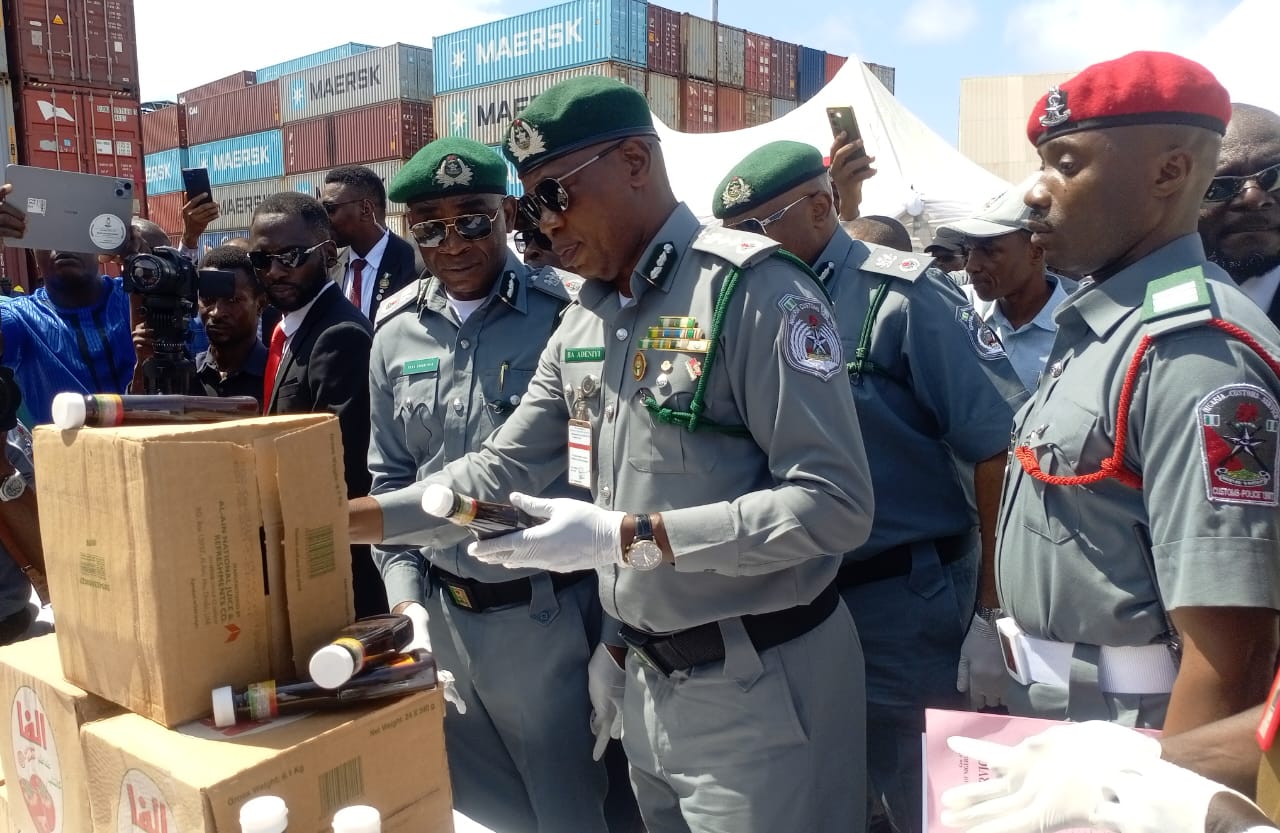
The Nigeria Customs Service (NCS) has intercepted 13 containers at the Apapa Area Command containing more than 7.6 tonnes of cannabis sativa, nearly 170,000 bottles of codeine syrup, security-sensitive drones and large quantities of expired consumer and pharmaceutical products.
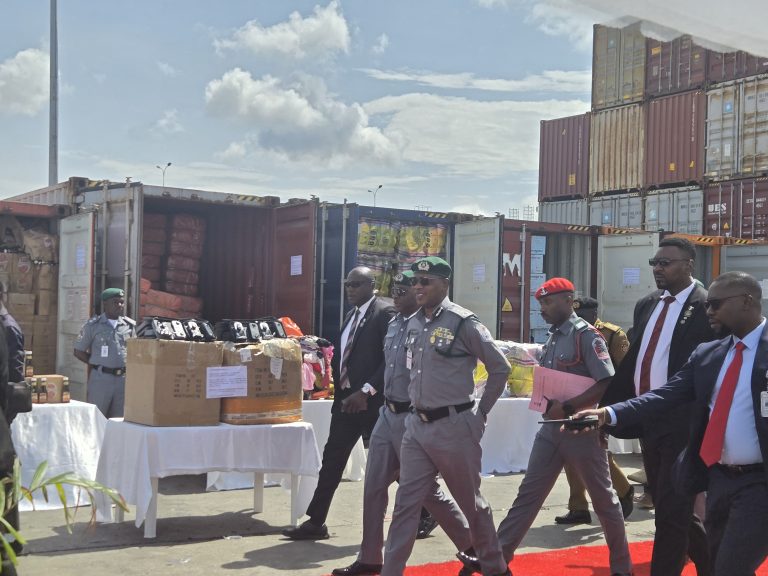 The Comptroller-General of Customs, Bashir Adewale Adeniyi, MFR, disclosed this during a press briefing on the seizures recorded at the Apapa Area Command. According to Adeniyi, the seized consignments have a combined duty-paid value of ₦43.59 billion.
He said the seizures were the result of sustained intelligence-led operations supported by enhanced cargo profiling, risk assessment, documentary scrutiny and targeted physical examination.
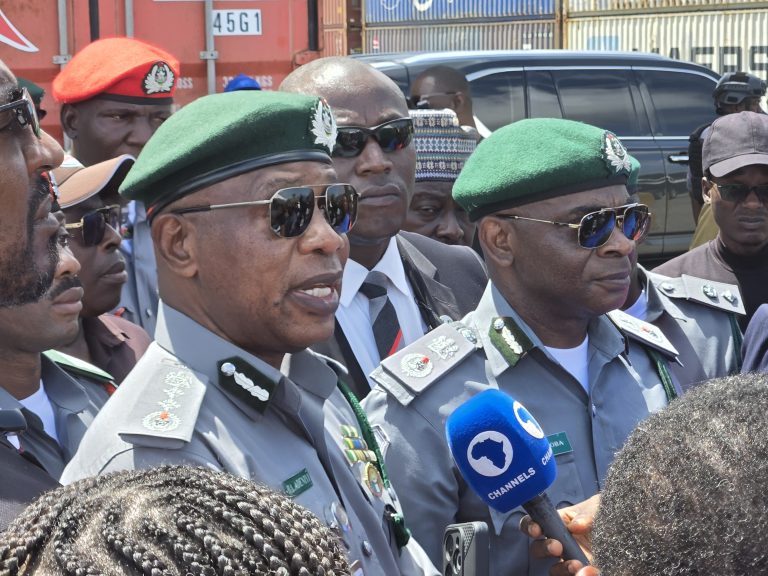
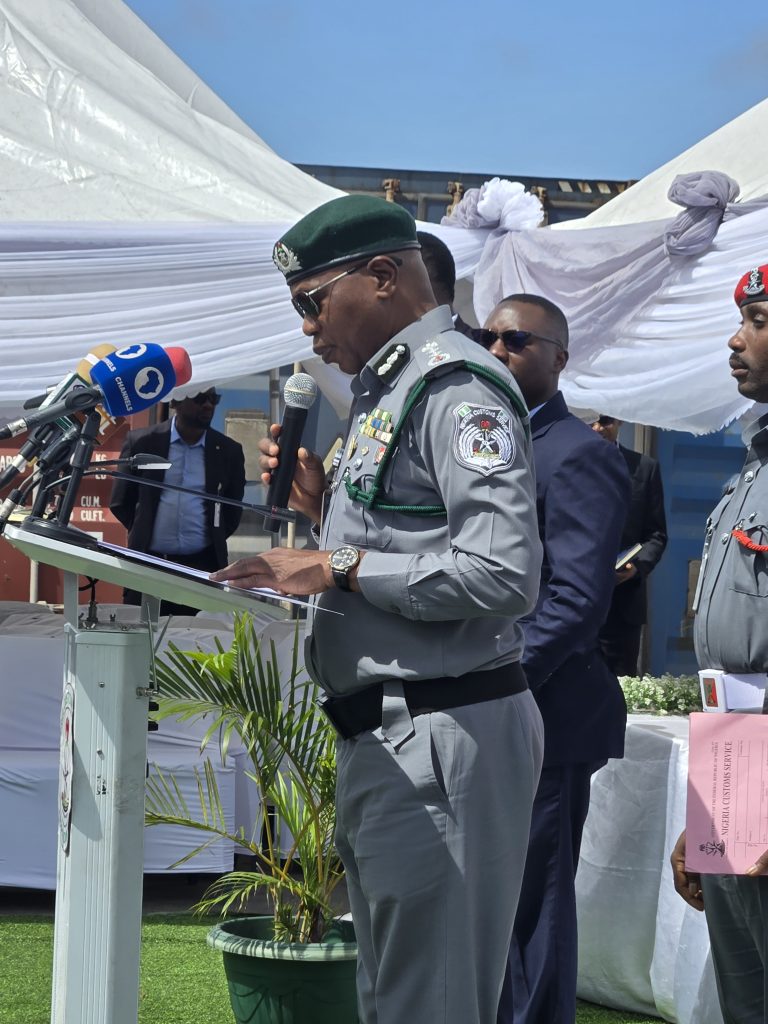 “The containers behind me are not an isolated event and they should not be reported as one,” Adeniyi said, explaining that the Service’s mandate extends beyond revenue collection to include securing the supply chain, protecting Nigeria’s borders and preventing unsafe or prohibited goods from entering the country.
Three of the containers contained a combined 15,245 parcels of cannabis sativa weighing 7,624kg, or more than 7.6 tonnes. The consignments were intercepted in containers HAMU 3086682, FANU 1933352 and MSKU 3941778.
HAMU 3086682 contained 4,777 parcels of cannabis weighing 2,388.5kg, concealed alongside assorted automobile spare parts, coffee mix, oats and three vehicles. FANU 1933352 contained 8,287 parcels weighing 4,145kg, alongside three vehicles.
 The third container, MSKU 3941778, contained 2,181 parcels weighing 1,090.5kg, alongside foreign parboiled rice, automobile spare parts, lithium batteries, a photovoltaic combiner box, turmeric and fish products.
Adeniyi said the cannabis interceptions were achieved through inter-agency cooperation involving the National Drug Law Enforcement Agency (NDLEA) and intelligence from international security partners.
He said the information was analysed and acted upon through cargo profiling, documentary checks and targeted examination by Customs officers.
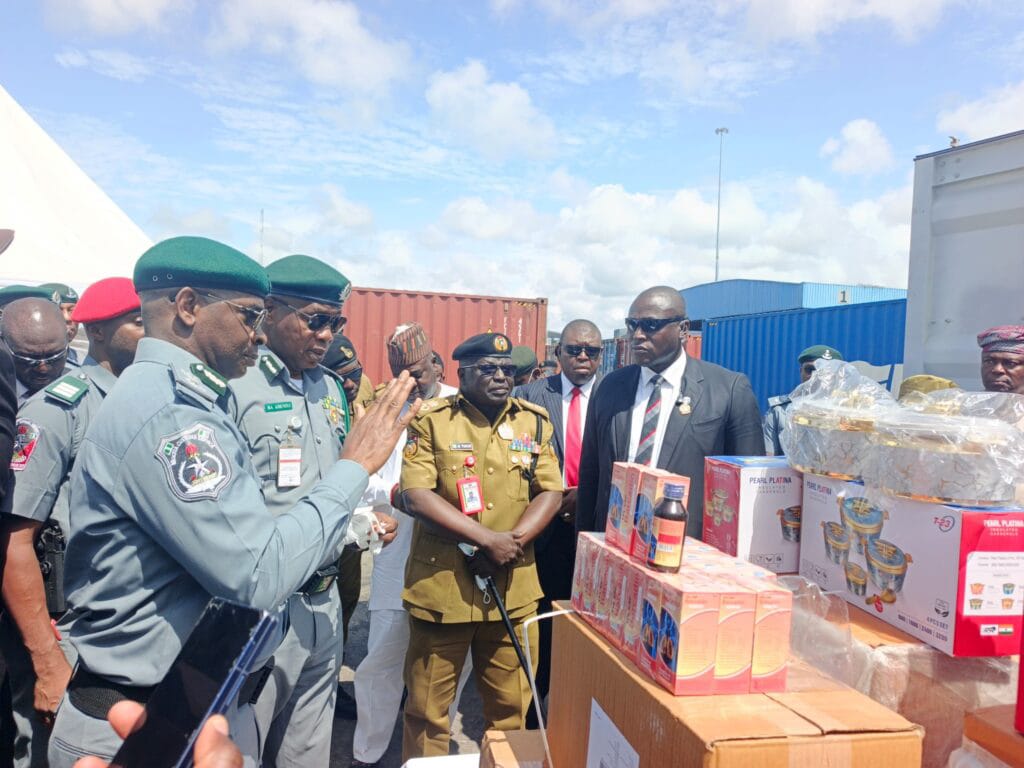 Customs officers also intercepted TCKU 7653306, a 40-foot container carrying 1,700 cartons containing 169,998 bottles of codeine syrup concealed beneath household items.
Adeniyi described the abuse of prohibited substances such as codeine among young Nigerians as a longstanding national concern, citing its wider consequences for families, public safety and productivity.
In another seizure, Customs officers Intercepts 108 high-definition dual-camera drones from container MSKU 9282528.
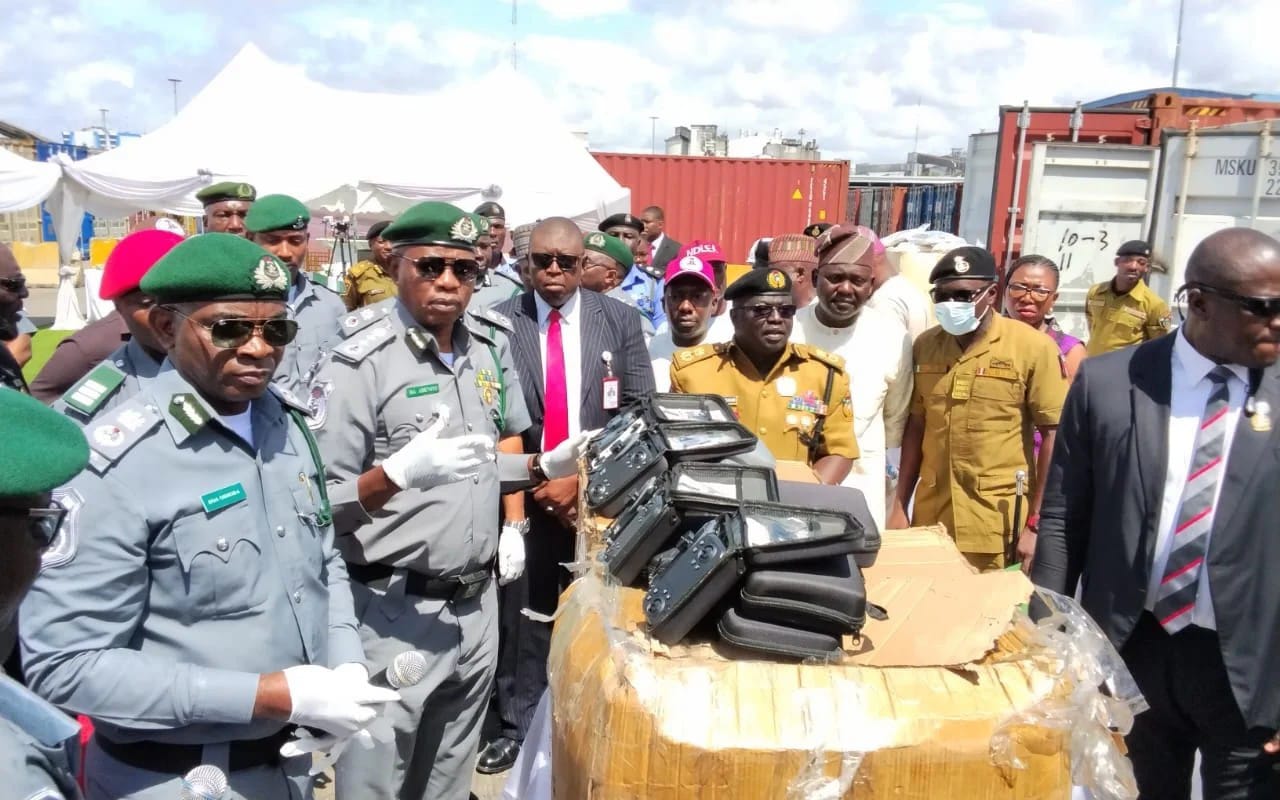 While acknowledging the legitimate uses of drones, the Comptroller-General warned that such equipment can become a security threat when placed in the wrong hands.
He said importers of restricted or security-sensitive equipment must obtain the necessary security approvals, end-user certificates and supporting documentation before clearance.
“Consignments of that character that arrive without them will be detained,” Adeniyi said, stressing that Nigerian ports would not be allowed to become channels for equipment that could undermine national security.
The operation also uncovered five containers loaded with expired products, including tomato ketchup, antiseptic liquid, vaginal tablets and disposable nappies.
The affected containers were identified as SUDU 7593139, PCIU 2834954, ZCSU 8749546, PONU 7890827 and MSKU 1524590.
Adeniyi warned that the importation of expired products poses significant risks to consumers, particularly because such products may be purchased and used without consumers being aware of their condition.
Three additional containers — MRKU 6185100, MRKU 5535966 and SEKU 4685299 — were found to contain a combined 1,282 bales of used clothing.
The Comptroller-General said the seizures demonstrate the Service’s increased capacity to identify high-risk consignments while facilitating the movement of legitimate trade.
He attributed the improved targeting capability to strengthened cargo profiling and risk assessment, supported by the B’Odogwu digital platform.
He also highlighted the establishment in July of an INTERPOL Data Centre at the Customs Headquarters in Abuja, which he said gives officers access to more than 152 international databases.
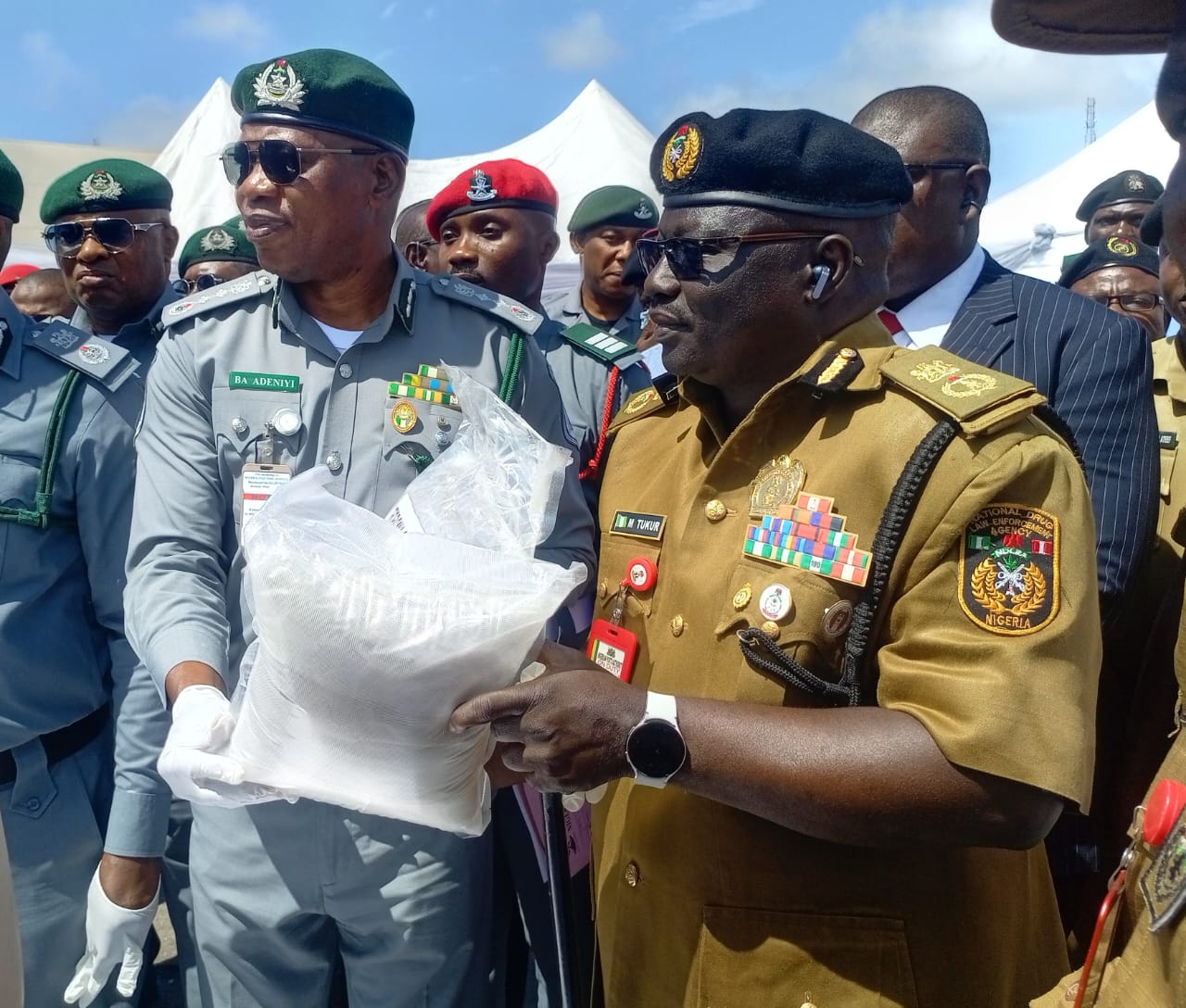 The Service, he added, has continued to deepen cooperation with the NDLEA, NAFDAC, the Office of the National Security Adviser and international security partners.
Adeniyi said the seized narcotics and other relevant items would be handed over to the appropriate agencies for further action.
He assured legitimate businesses that Customs would continue to facilitate the quick movement of compliant cargo.
“Scrutiny will fall on the consignments, transactions and operators that present identifiable risk,” he said.
He warned importers involved in false declarations, concealment, undervaluation or the importation of prohibited goods that Nigerian ports and logistics channels would not be allowed to become safe havens for illegal trade.
At the same time, he urged compliant traders to make use of Customs’ Advance Ruling mechanism, which enables importers to obtain guidance on classification, valuation and origin before shipping their goods.
He also encouraged businesses with a sustained record of compliance to join the Authorised Economic Operator (AEO) programme, which provides more predictable clearance and fewer interventions were justified by risk assessment.
Adeniyi commended officers of the Apapa Area Command for their vigilance and professionalism, while thanking the NDLEA, NAFDAC and international partners for their cooperation.
He reiterated that Nigeria’s ports must remain channels for lawful commerce, industrial growth and economic prosperity rather than routes for narcotics, controlled drugs, security-sensitive equipment or goods capable of endangering public health.








Integrate Security Awareness Into School Curriculum, Tantita Executive Urges FG

LASWA Calls For Homegrown Multimodal Transport Model

Tantita Security Calls For Overhaul Of Nigeria’s Maritime Security System

Dredgers Association Disowns Report Alleging Extortion Against Lagos Commissioner Alebiosu

Customs FOU Zone A Intercepts Five Live Pangolins In Ogun, Hands Over To Wildlife Centre

Blue Line: LAMATA To Add Alakija, FESTAC, Trade Fair Stations By February 2027

Lagos Blue Economy: Govt Engages Riverine Women Leaders On Inclusion, Sustainable Development

NFVCB Moves To Take Nollywood To China As Board Meets China Film Administration

NIHOTOUR Honours Tinubu With Highest Tourism Award As President Backs Sector Reforms

Oyetola Inaugurates NIMBEX Committee To Drive Maritime Investment

Customs Operation Whirlwind Seizes 38,700 Litres Of Smuggled Fuel In Adamawa, Worth N63.1m

Operation Sea Guardian: NIMASA Cracks Down On Cabotage Violators In Lagos Waters

NCS FOU Zone C Seizes 3,310 Jerrycans of Smuggled Vegetable Oil Worth ₦403.5m

Compt Joe Anani Records ₦178 billionin Revenue; Handover Leadership to DC MIiko

APAPA PORT COMMAND INTERCEPTS ₦26.5B CANNABIS INDICA CONCEALED WITH IMPORTED VEHICLES

Nigeria Customs Raises Breast Cancer Awareness in Abuja, Secures ₦50m Pledge

Revenue Boost: Apapa Customs Record ₦28 Billion in 24 Hours; Strengthens Government’s Revenue.

NIMASA Strengthens Partnership on Seafarer’s Warfare with Mission to Seafarers (MtS)

NIMASA Deepen Collaboration with NSIB to Promote Maritime Safety, Security

NRC Unveils Plans to Electrify Major Rail Corridors From Lagos, Warri Within 5 Years

NIMASA to sponsor 10 staff annually for Master’s degrees under renewed WMU partnership

DC ADEWOLE VISITS ASEYIN OF ISEYIN LAND AND SOUN OF OGBOMOSHO, SEEKS TRADITIONAL SUPPORT AGAINST SMUGGLING

NIMASA DG GETS AWARD OF RECOGNITION ON IMPACTFUL MENTORSHIP FROM ALMA MATER
