
Economy
NIMASA Collaborates with KAIPTC To Boost Digitalization For Women in Maritime Space

By Stella Okocha
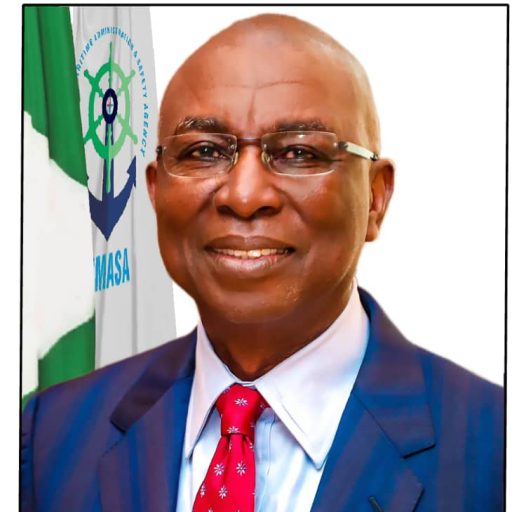
The Director-General of the Nigerian Maritime Administration and Safety Agency (NIMASA), Dayo Mobereola, on Tuesday during a regional symposium held in Lagos, emphasized on the importance of digital transformation as a key driver to boost women’s participation in the maritime industry.
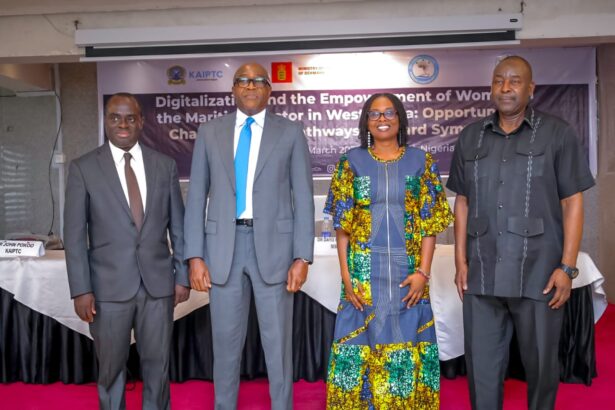
L-R: Head of Technology and Security Programme, T&SP, KAIPTC, Dr John Pokoo; Executive Director, Finance and Administration, NIMASA, Chudi Offodile; Director of Research, KAIPTC, Dr. Emma Birikorang and Deputy Commandant, KAIPTC, Brigadier General Zibrim Bawa Ayorrogo during a regional symposium on Digitalization and the Empowerment of Women in the Maritime Sector of West Africa in Lagos.
The symposium which focused on the theme “Digitalization and the Empowerment of Women in the Maritime Sector of West Africa: Opportunities, Challenges and Pathways.” was organized by NIMASA in collaboration with the Kofi Annan International Peacekeeping Training Centre (KAIPTC), Ghana.
The symposium, which was supported by the Ministry of Foreign Affairs of Denmark and the Inter-Regional Coordination Centre for Maritime Safety and Security in the Gulf of Guinea (ICC), brought together senior government officials, maritime professionals, academics, women’s organizations, and media representatives from across West Africa.
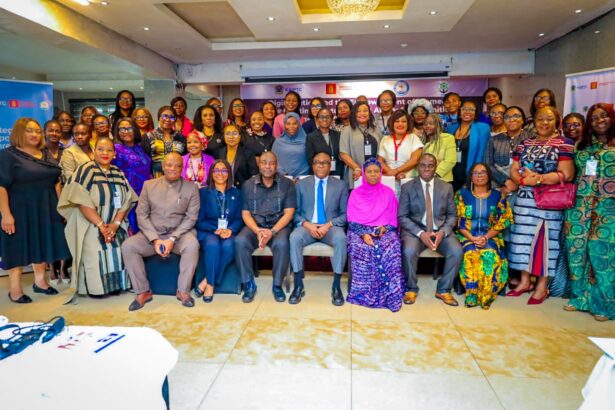
Group photograph of participants during a regional symposium on Digitalization and the Empowerment of Women in the Maritime Sector of West Africa in Lagos.
Speaking at the event, NIMASA DG who was represented by the agency’s Executive Director for Finance and Administration, Chudi Offodile, pointed that digitalization has the potential to significantly reduce the gender gap in the maritime sector by creating new opportunities and eliminating traditional barriers that have limited women’s participation.
According to him, digital transformation is redefining the maritime industry by shifting the focus from physical strength to intellectual capability and technological expertise. “Digitalization acts as the great equalizer, shifting the industry’s centre of gravity from physical strength to intellectual agility and technical precision. Through digital platforms and e-learning systems, a young woman in a rural West African community can access the same training modules as anyone in more advanced parts of the world,” he said.
Mobereola further noted that the global maritime sector is undergoing a profound transformation driven by automation, digital technologies, data systems, and smart logistics.
These innovations are reshaping ship operations, port management, and regulatory frameworks within maritime administrations worldwide. He reaffirmed the agency’s commitment to promoting inclusive maritime development, stressing that Nigeria is determined to position its maritime sector as a model of gender inclusivity and digital excellence in the region.
Stating his remarks, the Deputy Commandant of KAIPTC, Zibrim Ayorrogo Bawah, highlighted the strategic importance of the Gulf of Guinea and the need to ensure greater involvement of women in shaping the future of maritime governance in the region, especially in the era of digital transformation.
Bawah also noted that although women’s participation in maritime affairs has historically been limited by socio-cultural and institutional barriers, their involvement is crucial as it brings diverse perspectives and innovative solutions necessary for effective maritime governance.
Participants are expected to explore key issues including digital innovation in maritime governance, gender inclusion in maritime security operations, capacity building for women in digital maritime skills, and policy frameworks that promote gender equality across the Gulf of Guinea region.
The engagement is also aimed at strengthening collaboration among regional and international stakeholders to advance inclusive and sustainable maritime development in West Africa.


CGC Adeniyi Host Customs Diplomatic Reception to Strengthen Global Partnerships.

WABOTAN Commends NIWA and LASWA for Sustained Collaboration on Waterway Safety

Customs Strengthen Post Clearance Audit Capacity with World Bank Group

Ooni of Ife Acknowledge Tinubu’s Commendation on CGC Adeniyi’s Leadership

From Hope To Harbour: How AMSAY Conference Is Changing Lives Of Nigerian Students

We Want To Do More for Nigeria’s Film Industry — NFVCB Boss, Shaibu Husseini

Eid-el-Kabir: CGC Adeniyi Calls for Unity, Sacrifice as Customs Sustains Economic Drive

NCS Clarifies Lawful Enforcement Actions On Vessel Discharging Without Customs Clearance.

NATOP Inaugurates Oyo State Chapter of South West Zone

Nigeria Customs Deepens Media Ties to Boost Stakeholder Engagement

LASWA Warns Waterways Users Against Night Travels During Eid-el-adha Celebration

Umar Warns Boat Operators on Safety Ahead of Eid-el-Kabir, Urges Calm Over Supreme Court Judgment

DC ADEWOLE VISITS ASEYIN OF ISEYIN LAND AND SOUN OF OGBOMOSHO, SEEKS TRADITIONAL SUPPORT AGAINST SMUGGLING

DCG Dera Nnadi Bids Farewell To NCS, Celebrates Legacy of Service

NIMASA to sponsor 10 staff annually for Master’s degrees under renewed WMU partnership

NRC Unveils Plans to Electrify Major Rail Corridors From Lagos, Warri Within 5 Years

Nigeria Customs Intensifies Stakeholders’ Support Towards National Single Window Implementation

NCS Honours DCG Nnadi, ACG Egwu at Ceremonial Pulling-Out Parade

Allied Air, SAHCOL to launch cargo operations at Ogun Gateway International Airport

Customs Investigates Officers Over Anti-Smuggling Incident In Oshogbo

Oyo/Osun Command Strengthens Partnership with BATN; Pays Courtesy Visit to Alaafin of Oyo

FG Launches National Single Window; Set to Crash Cargo Dwell Time to 7Days.

NIMASA Collaborates with KAIPTC To Boost Digitalization For Women in Maritime Space
